Tuesday, 18 October 2016

Seminar 3 / Profile Picture Frames / Cybernetic Self Research / Tracy Lannon

In this seminar I listened to ideas of others contributed some of my own to help the developmental progress in our projects. I explained my idea of incorporating the illusive nature in scamming online, with the implication you never know who is on the other side of the internet. Plus, the idea of how I want to connect this with how our eyes perceive illusion, by creating the high and low spatial frequency vision between two faces to express the illusive side to scamming. It was recommend to me by one of my coworkers that if may be a good idea to frame the illusive faces with contemporary social media frames to illustrate where the danger is situated. I thought this could be a really simple, but effective idea to incorporate into my design to improve the message I intend. I will investigate this notion and experiment with it in my project.


I have gathered profile picture frames, as an idea to combine each frame outline to use as a boarder for my illusive image of faces. I could possibly overlay each frame behind my image to illustrate that anonymous criminal activity scales across all media channels, to my audience of social media users. This will reinforce the idea of false perception, linking the faces to social media profile pictures through the application of the recognisable frames and will communicate alongside my image the illusive side to not knowing who is on the other end of the internet.

I will experiment with this idea as a feel it may be important to get the link of profile picture frames into the mix of the design. Some are different shapes and some stick to the traditional square which I would have to do something about. I will create the traditional squares to be slightly rotated and slightly raised to create the impression of different profile picture frames. Also, I will create possible compositions for my overall poster design, by arranging the title type in different positions. This will serve as a template to reflect on when designing my poster.

Monday, 17 October 2016

Pete Norris / Lecture 3 / Market Data and Market Research

Moving forward from last week, Pete taught us about market data and market research in industry. Data and research is the logical next step from last week after learning, after analysis, understanding the brief and what the client wants. Now its time to discover what more we can get to help us design for what we need and research is the way to push this forward.


Initially, we looked at marked research. There are two types of market research, Primary data and secondary data. Secondary research is known as, desk research. You use the internet or books and fire away to find data and information, everything is at hand and there is no need to create any hassle to go out and find it. On the other hand, there is primary data. Within primary data there are two stems, quantitative and qualitative. Primary data is when you go out to find your own body of research.


Quantitative research entails asking a lot of questions and usually undertaken with the classic clipboard and pen. There are three types of quantitative data, geographic, pshycographic and socio-economic. Geographic data discovers how you live and where you live. Figuring out whether the area you live in has an influence on you and the type of things you will buy. Phycographic looks at how you think and what interests and excites you. What you think and what interests you may have may determine what you buy and this is what phycographic research finds out. Then there is socio-economic data. This looks at your class and financial ability, discovering whether this will influence what you buy. Quantitative research is good because it helps to pinpoint a market, lots of answered questions makes lots of clarity and detail. However, this method can be complex and difficult to due, especially if you have time restraints. Plus, it is carried out at a price, usually £150.00+ and an ethics form is needed to ask the questions in public.


Qualitative data is much more regarded as quality data. This is the interview and focus group, talking with people who are in the know and talking about a market or issue that you need to understand. It is much cheaper than quantitative research, all you need to do is arrange a meeting and go and talk to them. So, it is easily done and offers a much better three dimensional view of the situation. The cons are there are no statistical validation, it is an opinions affair and the success of this research depends on your ability to control the discussion.


After you have obtained the required research you need to use it, introducing market segmentation. Market segmentation works out exactly the people who you are talking to, this is critical. Once you understand those certain people who you target to can begin to picture them and know learn to understand how to communicate to them. You can break your market down by all sorts of things, age, sex, social class, geography, interests and more. Doing this will help to cleverly focus design to where your market will see them. For example, you would not situate a design for an old person far away from them at the back of the room, you would situate the design somewhere where they are sitting so they can easily interact and see.


A way to explain Market segmentation, we looked at the market for books. Books are broken down into two areas, non fiction and fiction. Fiction breaks down into all sorts of areas, children's, comic, horror, romance, thriller and more. Then each of these are expanded to their own brackets. For example, children's books will be broken down into age, 1-3 years, 3-7 years and 7-12 years. All of this helps to create a focus towards an audience and target what you design for them.


To make sure you have segmented your audience successfully, you have to make you it is measurable and something you can identify. Also, to make sure you can get access to it and use it as a means of communication to access these particular people. Then you need to make sure that sour market is substantial, in terms of what you are going to be paying for adverts. Is the audience great enough to generate an income. Because, I learnt if you wanted to insert and advert into the market, you have to pay an awful lot of money. Mens Health for example, if you wanted to inert a mens health advert into a cover of a magazine, your looking at around £15,000 per insertion. There is a lot of money involved and you shouldn't be scared of it, if you carry out everything we have learnt advertising will work. Finally, are your designs meaningful. Basically, is it relevant to the company and audience, if its not it wont work effectively.


Next, I was introduced to data sources. some are private and confidential that me as an academic can use to research, discover and learn for myself within the world of design at the moment. The data that is private and confidential, is only retrieved at a price so it is very important I do no share the information I may find out from these sources. The data sources are seen above.


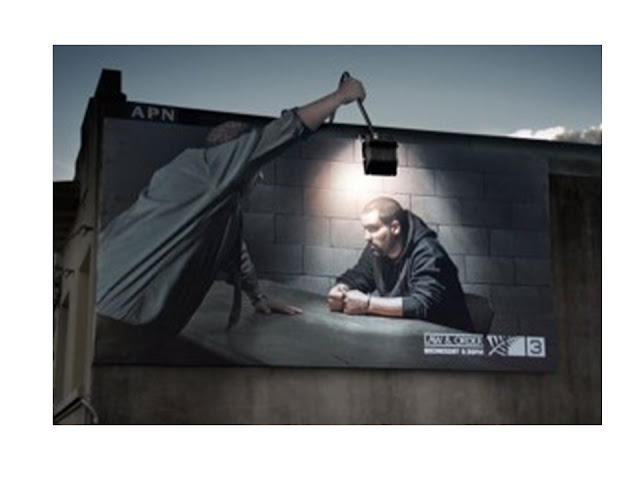


To end the lecture we was shown a reel of cleaver adds that amazed the world and successfully advertised their products in unique ways. We was shown this as to make sure our minds think wider than from just traditional paper. Also, to be encouraged to not stick to the limits necessarily when given a brief, to push the boundaries and be unorthodox. With social media these days, anything out of the ordinary goes viral and the whole world sees the advertisement. Hitting a much wider audience that you could have imagined. Which is a way of thinking that will continue to evolve and grow as technology and social media continues to rise. I have learnt a lot in this lecture and can take a lot away from it. I now feel more confident and aware in terms of research in industry and I have a more open mind to ideology in terms of answering briefs than I did before the lecture.


Friday, 14 October 2016

Cybercriminal Money Scams 2016 / Cybernetic Self Research

Cyber criminals have affected online businesses and individuals since the internet first came to be. The rise in technology have led internet services and websites to make it easier and easier to pay bills, shop, make online reservations other means of payments. You can do any of these actions from anywhere in the world, removing any physical boundaries and making our lives easier. However, It also makes life easier for crime. Cyber criminals have endless vulnerable targets in the world who they can scam for money and endless platforms to perform the crime. Below are the most common up to date techniques cyber criminals scam people with.

http://cdn2.hubspot.net/hub/441818/file-3147721398-jpg/blog-files/paypal-phishing-scam300x300.jpg

Phishing Email Scams

Phishing scams are communicated through emails and social networks. Cyber criminals will send messages to try and trick you into giving away any login details or personal information that they can use for their benefit and leave you in the dumps behind. They get their victims to believe that the message sent is from an official source, usually pretending to be bank authorities or other financial institutes. Their messages contain links that take you to web pages that resemble that of a real company, but is actually controlled by the criminals, asking for personal information on a fake login access page.

They are most successful when people arent paying much attention, so they play on this to lure them into a trap. Phishing criminals create a sense of urgency to frighten the target, telling them a story of how their bank account is under threat and that they need to fix this as soon as possible. Often asking for personal information to quickly access and confirm your identity of the account. At this point they now have all the information they need to access the account or sell the account to the dark web or other interested parties.


Money Laundering Scams

This scam is one of the oldest and most popular scamming schemes, most people will have encountered one of these scams in their mail box in their internet life. It starts by opening an anonymous emotional message who claim to be an official government member, a business man or a wealthy family member asking for help to retrieve a large sum of cash from a bank. In exchange for help the offer a you a large sum of money. The scam starts off with the victim paying for small fees and legal costs and then leading you on to pay more for additional services, transaction and transfer costs. They keep sending confirmation letters to make you believe it is legit, but eventually, you end up with no money and no promised money.


https://ilookbothways.files.wordpress.com/2011/01/ecard1.png?w=450

Greeting Scams

Another old scam, this is usually a greeting card message that seems to be from a friend. But, when opened you usually end up with malicious software that is being downloaded and installed on your computer. Causing adds to pop up all over your screen as you use it. In some cases however, your device can be infected with really dangerous malware. In this case your computer will start sending private data and financial information to a fraudulent server controlled by IT criminals.


http://www.scam-detector.com/assets/how%20to%20get%20prequalified%20for%20a%20mortgage.png

Guaranteed bank loan or credit card scam

This scam sends messages to people that guarantee you large amounts of money that have already been pre-approved by the bank. People who are experiencing difficult times at the moment they receive the message they may be vulnerable to fall for this 'too good to be true offer'. However, this in general is an easy scam to spot. Using your common sense you will be able to to tell that it is fake, a huge bank loan or credit card would not be approved without knowing your financial situation.


http://www.ripandscam.com/images/lottery-ghana.jpg

Lottery scam

The lottery scam is a message that you open informing you have won a huge sum of money. But, before you can gain access to that money you have to pay some initial small fees. A lot of people fall for this as it highlights everyone wildest dream of quitting their jobs and living off of their winnings for the rest of their lives. this fantasy sometimes clouds peoples judgement and jump straight into the transactions to receive their so called money.


http://nnimgt-a.akamaihd.net/transform/v1/resize/frm/storypad-IUkL49scI4FGKgY5dEIBe5BSplA%3D/f1a9f422-80fe-44ca-877d-85ccd36b116d.jpg/w1200_h678_fmax.jpg

Hit-man Scam

Cyber criminals send you threatening messages to scare you into paying money. Most of the messages say they will kidnap a family member or that they have been payed to kill you unless a ransom is paid to them. They reinforce this threat with a message filled with details about the victims life, using personal information they find on social media. This is why it is wiser and safer to not display lots of personal information on social media.


https://www.webroot.com/blog/wp-content/uploads/2014/06/online-dating-scam-300x225.jpg

Romance Scams

This scam plays on the nature of a persons subjective self, when their lust causes them to drop down their guard and think illogically. The scam takes place on social networking sites, where victims are informed about the notion of romance. The male scammers and usually based in west Africa and the female scammers are usually from eastern Europe. Cyber criminals have used this method for years and have improved their method based on their victims reactions. Some strategies take months to gain the trust of the victim and in some cases a meeting is arranged. The way they gain money from these scams are either, an unpredictable event occurs and the scammer needs money to buy a passport or other item of desperation, or they are kidnapped and held for ransom at the arranged meeting.


https://heimdalsecurity.com/blog/wp-content/uploads/2014/09/fake-antivirus.jpg

Fake Anti-Virus Software

This scam consists of a pop up saying 'your device is infected, install this antivirus software no to protect'. Scammers design the pop up to appear how you would expect windows or a security service provider to illustrate the problem, making you think that it maybe true. In some cases you can end up with a Trojan, Keylogger or CryptoLocker virus. These can lead to scammers to block and encrypt your operating system and request a sum of money for you to gain access to the computer again.


http://www.riskandinsurance.com/wp-content/uploads/2015/07/CyberFraudImage_700x525-700x525.jpg

Impersonation Scam

Cyber criminals can hack onto your social media accounts and pretend to be you for their own value. They can create a false situation and ask for help through cash transactions from all of your contacts, to hopefully gain money from the concerned individuals who are offering their help. To avoid the situation of a profile hack, you should treat your social media account information as you would with your bank and do not display lots of personal information online that criminals could encode to discover your password.


http://waystoavoidscamsonline.com/wp-content/uploads/2016/05/make-money-online-scams-768x300.png

Make Money Fast Scams

One of the most common scams is the scam that promises the fortune of making money fast on the internet. They promise you made up jobs, plans and methods of getting rich fast and promised money from government sources. With the implication to work at home victims feel safer and lured into giving away personal information and financial data with the promise from a make believe source over the internet.


http://www.smartconsumer.ct.gov/smartconsumer/lib/smartconsumer/images/travel_scams_plane_ad.jpg

Travel Scams

The victim receives an email with an irresistible offer to travel to an exotic location for a special holiday, but it expires in a short amount of time. The criminals hide necessary costs until you pay the initial offer and they simply take your money without sending you anywhere. To avoid this, go with the well known and trust worthy travel agencies to be safe.

https://heimdalsecurity.com/blog/top-online-scams/

Recent Money Flipper Scam / Instagram and Facebook / Cybernetic Self Research

A recent social media scam was called the money flipping scam. This was set up by a criminal group who expressed that they could flip your money to make more money, like a magic trick. This of course went viral, as bizarre stuff do on social media, causing some people to fall for it, especially inexperienced users. The anonymous profile reassures people that the money making tricks are real and work, with prearranged photographs and videos of the trick performed with satisfied customers. However these are all set up to create the idea of false perception.

http://www.dalerodgers.co.uk/wp-content/uploads/2015/01/instagram.png
Because, this went viral and looked like a real thing people were thinking maybe this could work and people was falling for it. This is how a lot of scams publicise themselves through social media. Criminals took money off of people by asking them to go out and buy a green dot money pack, which is a prepaid card, to top up with the amount you want to flip. If you want to flip £100 you would flip to and receive £1000. After topping up the card they will ask for the card details, so they can access it and add a 0 to the £100 to create £1000. But, they will tell you in order for them to add the 0 they will have to cut the profits, to basically make the false business sound real.

In the end, they simply take the card details and steal the money. No money has been flipped and what ever money deposited on the card would be seen ever again. This is one small scam of many from social media. I highlighted this one because it is fairly recent and I can relate this to my current project, 'raising awareness of criminality through anonymous profiles online', to gather research and build a final design to highlight the crimes cyber criminals commit online.

Tracy Lannon / Studio Research Feedback / 14th Oct

Tracy provided guidance towards creating a research question and how I could take my project further, in terms of focus. I was having difficulty to create a research question for my project direction. I had collated many possibly research angles but it was hard to group them together and create a research question. After, my discussion with Tracy I discovered a solution to overcome this problem and get back on track.

What I found, was my whole idea was very broad and just needed focusing on a more specific audience and a particular theme. Tracy guided me to look into specific crimes committed by anonymous profiles online and who are the targeted victims. From this, I can pin point an area that I will investigate further to create a better and audience specific design. For example, I could look in to credit card fraud and the most targeted victims, Identity theft and victims and other scams and specific victims. This is something I will investigate to progress my project development.

To conclude, I have gained a greater understanding of how to develop a research question and his has given me a refreshed focus on where I should be going with my project. I was also recommended sources of research to help, 'google scholar', 'academia' and 'research gate', to help me in my study. 

The Research Question / Polina Zioga / 14th October

Understanding how to develop a research question, was the topic of today. A good research question talks about your research subject and reveals how you will investigate your research subject. It will provide direction and become a guide to what you research, acting as the spinal cord of a body of research. Helping to narrow down research, instead of aimlessly researching anything and everything. Plus, it helps you stay on track and not stray away from the subject at hand, which can happen when you write a lot without a solidified focus from the beginning.


It was explained to us how you create a research question. First you state your subject and interests and create a title. Then research around the area and highlight all of the relevant information that intrigues you the most ticking all the boxes that you want to investigate. From this you should be able to build a research question. Below is an example to summarise, investigating Scandinavian graphic design.


After, I put what I had learnt to practice to create my own research question. My area of interest for my project is to raise awareness of criminality online through interactivity with anonymous profiles. In pairs, we both pulled out questions from each others title and gave feedback of what and how to research to create a research question.

Questions we pulled out from my title include
'investigate stories that have happened'
'tricks and illusions the criminals set in place that make you mistake and interact'
'types of crime online'
'who are targeted / different ages? / old people scans / credit card scams / young?'
'Technologies influence, before and now'

From this discussion about research angles and feedback, I have an idea of where I could take my research and create a research question. I could create a research question to focus on certain topics within my broad title. For example, I could create a research question focusing on specific targets and specific crimes, credit card fraud or determining whether old or young people are more vulnerable to criminality online through anonymous profiles.

Tuesday, 11 October 2016

Words hurt / Cybernetic Self Research

https://s-media-cache-ak0.pinimg.com/564x/46/b0/a2/46b0a2ccb85331e62fe2a2dc3178d577.jpg

When I saw this design on Pintrest, by Mathew Hayes, I instantly liked the ideology of using type in this manner within my project. This poster design is about cyber-bullying and raising awareness they are not alone and help on the table if needed, for both bully's and the bullied to sort them selves out in the right way. The idea I have in mind, gained from this poster is to have type behind or connected to my illusive image of faces and the type will communicate the documented crimes that anonymous users commit. I would use a really dark shade of grey for the type to almost match the black background and to not distract any attention away from my illusive image. Plus, this would also have a positive impact on the image as you would not see this type from far away or squinting, until up close and focusing.

I will try and make the type appear as digital as possible to reflect the cybernetic theme. I will research typefaces used on social media to further engage with the ideology behind the design and maybe position, rotate and resize the type in different compositions like Mathew to create an interesting effect. This could illustrate the different angles anonymous criminals take to manipulate the victim. Similar, to the poster design above I would make the type fade, as it gets further away from the image. This would be a good technique to draw attention to the image.

In addition, the overall composition of Mathews design draws attention to his image. A path I will definitely follow. The placement of his title type does not distract any attention off of the powerful image and the fact the image is so powerful the title type does not need to be big to capture the audiences attention. The image itself intrigues the audience to want to find out what the design is about. He also uses type in different colours for the title to cleverly express the issue and the solution to the issue. The issue is highlighted in white and the solution is clarified in red. This could also be an idea to take on board.